

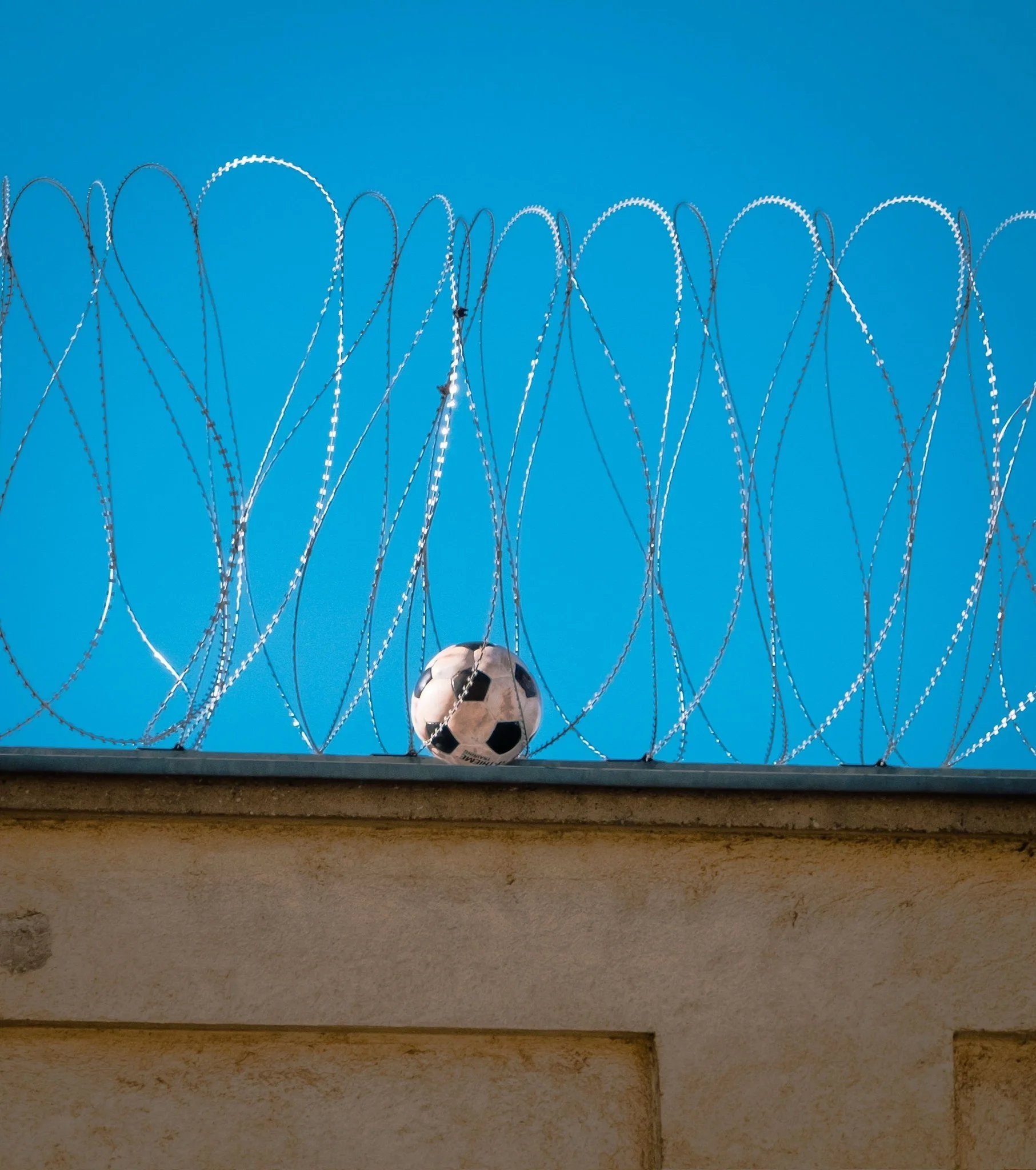
Football Unites the World"... (Subject to Visa Approval by the White House)
ENGLISH
The ball has already started rolling in Mexico City, but in the institutional offices the silence is deafening. With the 2026 FIFA World Cup underway under the umbrella of the United States, Mexico, and Canada, an ethical and legal rift fractures the traditional narrative of Football for Hope: To what extent can an international federation entrench itself in a comfortable political neutrality when the borders of a host State openly sabotage the right to participation, circulation, and even the integrity of the greatest football spectacle in existence?This unknown is not a mere exercise in academic rhetoric; it is a crisis of institutional legitimacy that society is witnessing in real time. A train wreck where the omnipotent US state sovereignty ignores the rules of the game of Lex Sportiva and the framework of Ius Cogens, drawing a flagrant comparative grievance when analyzing the rearview mirror of recent history.To understand the current void of human and legal meaning, it is mandatory to look back eight years to the 2018 World Cup in Russia, in which the Fan ID system was implemented, approved through a Russian federal law and backed by FIFA's logical obsession with free circulation.That control system was received with mixed feelings: criticized for the collection of biometric data and government control, the Fan ID ended up becoming much more than an identity mechanism. In practice, it was a historic amendment to the Kremlin's rigid visa system to celebrate a World Cup event that would make such a hermetic and restrictive nation a space of peace and apparent fraternity.Traditionally, Russia bases its immigration policy on strict international reciprocity with third states. However, during the tournament, the Fan ID allowed the free entry and circulation of thousands of fans without an ordinary visa; a valid ticket and the document in force were enough. The system operated from ten days before the opening match until ten days after the final, a period that the Russian government itself extended until the end of the year to squeeze international tourism, with a clear corporate tourism eagerness from which the top North American leader should copy something.To conclude on this topic, this flexibility benefited even citizens of States whose diplomatic relations with Moscow were going through their worst moments. Americans, British in the midst of the storm over the "Skripal case", and Australians even urged not to travel by the Canberra government, enjoyed an unexpected scenario of peace and mobility in Russian territory.Eight years later, the scenario is radically opposite. Faced with current restrictions, FIFA's top management has repeated a mantra that is as novel as it is simple: The body is incompetent to intercede before the sovereign decisions of States, something that absolutely escapes its competence. An excuse that surprises those who were unaware that the spirit of FIFA knew any limit and that does not surprise those who for "X" causes are unaware of the fascinating and endless framework of application of Law. However, a rigorous reading of its own regulatory framework, which as we have said is presumed inapplicable or incompetent, de facto disproves this supposed passivity in the face of human rights and the integrity of the competition.Humanitarian function and non-discrimination: Article 2 of the FIFA Statutes establishes as a fundamental objective the preservation of humanitarian values. In harmony, Article 4.1 boasts extensively of the express prohibition of any form of discrimination based on national or social origin, political positioning, or any other condition. A wording that collides head-on with FIFA's inaction when the participation of certain groups is conditioned by geopolitical factors or commercial interest.Responsibility for external interference: Article 14.1. in its paragraphs i and j obliges member associations to manage their affairs independently. In this World Cup, the problem does not emanate from the United States Soccer Federation (USSF), but from the Washington government, since the articles contemplate imposing sanctions even when the interference comes from third parties unrelated to the federation, when it affects the competitive or organizational framework of association football. That said, the statutory system does not exempt the organization from responsibility if a state authority or a third party with interests in the competition generates effects incompatible with the coexistence obligations of organized football.The reputational impact: Article 13.2 of the Disciplinary Code allows measures to be taken against conduct that harms the reputation of football or FIFA itself. Does not the growing international controversy, the public scandal that has been generated in social networks and media, added to the discontent of the fans, result in an evident self-discredit of the institution?As if that were not enough, to further reinforce this position, we can move to Article 1.9 of the brand new and new Regulations for the 2026 FIFA World Cup, which underlines that other binding rules derived from international obligations assumed by the organization will be applicable and thus observable. FIFA, which does not leave a regulatory thread untied –as it should be– precisely does not operate in a legal vacuum and legal disconnection, since its legitimacy connects with the Charter of the United Nations and the Universal Declaration of Human Rights, flags of which it has boasted in a more than deserved way, during the last two decadesEven so, the contrast of the situation eight years ago with the one we are currently experiencing in this first tripartite World Cup is unavoidable. While Russia altered its legal framework to facilitate mobility, the United States marks a step backward again and today deploys a scenario of active exclusion that affects groups linked to the tournament.The case of Somali referee Omar Artan, whose presence was aborted when he was denied a visa without apparent basis, is just the tip of the iceberg. The national team and the federal structure of the Islamic Republic of Iran even face access and mobility restrictions whose compatibility with International Law, Human Rights, and the core foundations of Lex Sportiva are, to say the least, questionable.Under the eternal narrative of "national security" and the unbridled obsession in terms of protection, Washington exercises a sovereignty that mortally wounds FIFA's official motto: "Football Unites the World", because the difference with the past does not lie in the migratory rigidity of the hosts —which both have—, but in the political will and leaving behind situations foreign to sports peace, because Russia created an exception to save the integrity of the competition, and on the contrary, the United States generates an exclusion that punishes third countries with which it maintains geopolitical tensions, breaking the customary regulations of sport.This rift affects fundamental elements of Law in its maximum expression, such as free circulation or the due right to rest, both recognized in the prosperous and brief Universal Declaration of Human Rights.Translated into another example in practice, the logistical and transfer demands imposed on the Iranian football committee, which will have to face grueling routes during the group stage and immediate travels under threat of arrest after the matches they play on the West Coast, represent a clear grievance to competitive and egalitarian integrity and, at the same time, a clear break with the previously mentioned regulatory framework.The severity of this scenario contrasts with the legal forcefulness that FIFA deployed in the year 2022 and which was later underlined by a ruling from the CAS. The CAS 2022/A/8708 award was the confirmer of the Russian exclusion for the Qatar 2022 World Cup.This, in its paragraph 160, recognizes that the existing armed conflict forced FIFA to act to “protect its statutory objectives and the integrity of international competition.”Paragraph 174 went even further, describing the veto on Russia as a measure "reasonable, proportionate, and necessary to guarantee safe and orderly events of the highest level such as the World Cup", since the presence of these would have clearly threatened the integrity of the competition.The jurisprudence presented so far proves that FIFA does have punitive tools when it considers that the external context threatens its governance, integrity, and institutional as well as competitive credibility, currently anchored in passivity and immobility.This inaction also places Iran in an extreme legal, competitive, and federal crossroads, because opening the umbrella of a hypothetical analysis and in line with the regulatory framework established ad hoc for this World Cup event, if the Iranian federation decided to withdraw from the tournament as a sign of protest, the roller of the 2026 World Cup Regulations (Articles 6.1 and 6.2) would be activated, which provides for severe sanctions for the abandonment of classified teams that have taken part in the tournament.It is worth asking: Faced with a unilateral withdrawal, would FIFA automatically activate its sanctioning machinery against the Middle Eastern nation or would the protection of International Law and individual rights prevail over the commercial interests of the tournament?The doubt regarding this matter, without a doubt, floats in the air. –Note the irony–To avoid vehemence and maintain legal objectivity, which is what brings us to write these words, the existing sports jurisprudence comes back to the rescue of our argument.In the CAS 2019/A/6500 award, the Court of Arbitration for Sport recalled that the principle of political neutrality is not equivalent to invisibility or staying on the sidelines, but to an "active apolitics" where international regulations, sports regulations, and the coherent interest of the organizing entity itself, which in this case would be FIFA, prevail. The court ruled, thus settling arbitral doctrine, that geopolitical interferences cannot limit sports practice nor condition the participation of athletes exclusively at the whim of a third party in its powerful position, as is happening on this occasion.States, as in this case, the United States, are clearly sovereign to break diplomatic relations and establish their own conditions of entry to their territory, but when those unilateral decisions hit private actors in the exercise of their labor activity, also protected by different regulatory umbrellas and in a clear cause of exception such as the largest sporting event in the world, the conflict jumps the border of politics to become a legal-sporting litigation, and in which the top sporting actors, at least, will have something to say, hence, FIFA although settled in a clear comfort and passivity, has full capacity for intermediation in the situation and it is counterproductive for it to reject it as if nothing.It is not a matter of demanding the suspension of the USSF, as it is an autonomous entity separate from the decisions of the White House. The core issue is another: if FIFA and the CAS have repeatedly recognized that safeguarding the integrity of the competition justifies extraordinary measures, why is the debate not opened on the suitability of the United States as a co-organizer when its state policies sabotage the access, equity, and integrity of a tournament flawed since before its beginning?Hearing arguments that exempt FIFA from responsibility faced with the border controls of the superpowers, under the premise that geopolitics exceeds its internal legal system, is an exercise of profound regulatory surrealism and ignorance toward the rule that protects many actors in the international organized football scene, and in which we “try” to believe day by day.There is a biting irony in the fact that, while a national delegation suffers a logistically devastating itinerary because of a protectionist outburst from Washington or a young Somali is acclaimed as a hero in the Horn of Africa, for being declared the main enemy of the United States of America, the official rhetoric suggests a total regulatory helplessness.This position evokes the recent reflections of its president, Gianni Infantino, who, by diluting the debate pointing to the distant horizon of a hypothetical World Cup in 2035 on British soil, seemed to suggest that the rules of the international federation are an immaculate but inapplicable framework on planet Earth.Following that line of argument, one would get the impression that Lex Sportiva will only display its true universal efficacy the day the World Cup is organized on Mars or Pluto, when geographically it is safe from the geopolitical interests of international actors that usually go to the detriment of world peace.While that interplanetary football scenario arrives, the current regulatory mechanisms continue to wait in silence in the legal-sporting texts, awaiting the institutional courage necessary to be applied with the same firmness before any power on the international board, regardless of its flag.SPANISH
El balón ya ha echado a rodar en Ciudad de México, pero en los despachos institucionales el silencio es atronador. Con la Copa Mundial de la FIFA 2026 en marcha bajo el paraguas de Estados Unidos, México y Canadá, una grieta ética y jurídica fractura el tradicional relato del Football for Hope: ¿Hasta qué punto puede una federación internacional atrincherarse en una cómoda neutralidad política cuando las fronteras de un Estado anfitrión sabotean abiertamente el derecho de participación, circulación e incluso integridad del máximo espectáculo futbolístico existente?

Esta incógnita no es un mero ejercicio de retórica académica; es una crisis de legitimidad institucional que la sociedad está presenciando en tiempo real. Un choque de trenes donde la omnipotente soberanía estatal estadounidense ignora las reglas de juego de la Lex Sportiva y el marco del Ius Cogens, dibujando un agravio comparativo flagrante cuando se analiza el espejo retrovisor de la historia reciente.

Para entender el vacío de sentido humano y jurídico actual, es obligatorio mirar ocho años atrás a la Copa Mundial de Rusia 2018, en la que se implantó el sistema del Fan ID aprobado mediante una ley federal rusa y respaldado por la lógica obsesión de la FIFA con la libre circulación.

Aquel sistema de control fue recibido con opiniones encontradas: criticado por la recopilación de datos biométricos y el control gubernamental, el Fan ID terminó convirtiéndose en mucho más que un mecanismo de identidad. En la práctica, fue una histórica enmienda al rígido sistema de visados del Kremlin para celebrar una cita mundialística que hiciese de tan hermética y restrictiva nación un espacio de paz y aparente fraternidad.

Tradicionalmente, Rusia basa su política migratoria en una estricta reciprocidad internacional con terceros estados. Sin embargo, durante el torneo, el Fan ID permitió la libre entrada y circulación de miles de aficionados sin visado ordinario; bastaba una entrada válida y el documento en vigor. El sistema operó desde diez días antes del partido inaugural hasta diez días después de la final, periodo que el propio gobierno ruso amplió hasta finales de año para exprimir el turismo internacional, con un claro afán turístico empresarial del que algo tendría que copiar el máximo dirigente norteamericano.

Por concluir en esta temática, esta flexibilización benefició incluso a ciudadanos de Estados cuyas relaciones diplomáticas con Moscú atravesaban sus peores momentos. Estadounidenses, británicos en plena tormenta por el "caso Skripal" y australianos incluso instados a no viajar por el gobierno de Canberra, disfrutaron de un inesperado escenario de paz y movilidad en territorio ruso.

Ocho años después, el escenario es radicalmente opuesto. Ante las restricciones actuales, la alta dirección de la FIFA ha repetido un mantra novedoso a la par que sencillo: El organismo es inhábil para interceder ante las decisiones soberanas de los Estados, algo que absolutamente escapa de su competencia. Una excusa que sorprende a quienes ignoraban que el espíritu de la FIFA conociese algún límite y que no sorprende a aquellos que por “X” causas sean desconocedores del fascinante e inacabable marco de aplicación del Derecho.
Sin embargo, una lectura rigurosa de su propio marco normativo, el cual como hemos dicho se presupone inaplicable o inhábil desmiente de facto esta supuesta pasividad frente a los derechos humanos y de integridad de la competición.

Función humanitaria y no discriminación: El Artículo 2 de los Estatutos de la FIFA establece como objetivo fundamental la conservación de los valores humanitarios. En sintonía, el Artículo 4.1 presume de forma extendida de la prohibición expresa de cualquier forma de discriminación por razones de origen nacional, social, posicionamiento político o cualquier otra condición. Una redacción que colisiona frontalmente con la inacción de la FIFA cuando la participación de determinados colectivos queda condicionada por factores geopolíticos o de interés comercial.

La responsabilidad ante la injerencia externa: El Artículo 14.1. en sus apartados i y j obliga a las federaciones miembro a administrar sus asuntos de forma independiente. En este Mundial, el problema no emana de la Federación Estadounidense (USSF), sino del gobierno de Washington, pues el articulado contempla imponer sanciones incluso cuando la injerencia proceda de terceros ajenos a la federación, cuando afecte al marco competitivo u organizativo del fútbol asociación. Dicho esto, el sistema estatutario no exime de responsabilidad a la organización si una autoridad estatal o un tercero con intereses en la competición genera efectos incompatibles con las obligaciones de coexistencia del fútbol organizado.

El impacto reputacional: El Artículo 13.2 del Código Disciplinario permite adoptar medidas frente a conductas que perjudiquen la reputación del fútbol o de la propia FIFA. ¿Acaso la creciente controversia internacional, el escándalo público que se ha generado en redes sociales y medios de comunicación, sumado al descontento de las aficiones no devienen en un evidente autodesprestigio de la institución?

Por si fuera poco, para reforzar aún más esta postura, nos podemos trasladar hasta el Artículo 1.9 del flamante y nuevo Reglamento de la Copa Mundial de la FIFA 2026 el cual  subraya que resultarán aplicables y así observables otras normas vinculantes derivadas de obligaciones internacionales asumidas por la organización. La FIFA, que no deja un hilo normativo sin atar –como debe ser– precisamente no opera en un vacío jurídico y de desconexión jurídica, pues su legitimidad conecta con la Carta de las Naciones Unidas y la Declaración Universal de Derechos Humanos, banderas de las que ha presumido de forma más que merecida, durante las últimas dos décadas

Aún así, el contraste de la situación de hace ocho años con la que estamos viviendo actualmente en este primer Mundial tripartito es insoslayable. Mientras Rusia alteró su marco jurídico para facilitar la movilidad, Estados Unidos marca de nuevo un retroceso y  despliega hoy un escenario de exclusión activa que afecta a colectivos vinculados al torneo.

El caso del árbitro somalí Omar Artan, cuya presencia fue abortada al denegársele el visado sin fundamento aparente, es solo la punta del iceberg. La selección y la estructura federativa de la República Islámica de Irán afrontan inclusive restricciones de acceso y movilidad cuya compatibilidad con el Derecho Internacional,  los Derechos Humanos y los fundamentos nucleares de la Lex Sportiva, son cuanto menos, cuestionables.

Bajo la eterna narrativa de la "seguridad nacional" y la obsesión desbocada en términos de protección, Washington ejerce una soberanía que hiere de muerte al lema oficial de la FIFA: "Football Unites the World", pues la diferencia con el pasado no radica en la rigidez migratoria de los anfitriones — que ambos la tienen—, sino en la voluntad política y de dejar atrás situaciones ajenas a la paz deportiva, pues Rusia creó una excepción para salvar la integridad de la competición, y por el lado contrario,Estados Unidos genera una exclusión que castiga a terceros países con los que mantiene tensiones geopolíticas, quebrando la normativa consuetudinaria del deporte.

Esta brecha afecta a elementos fundamentales del Derecho en su máxima expresión, como es la libre circulación o el debido derecho al descanso reconocidos ambos en la próspera y breve Declaración Universal de los Derechos Humanos.

Trasladado a otro ejemplo en la práctica, las exigencias logísticas y de traslado impuestas al comité futbolístico iraní que deberá afrontar rutas extenuantes durante la fase de grupos y desplazamientos inmediatos bajo amenaza de arresto tras los partidos que disputen en la Costa Oeste, suponen un claro agravio de la integridad competitiva e igualitaria y a su vez una clara ruptura con el marco normativo anteriormente mencionado.

La severidad de este escenario contrasta con la contundencia jurídica que la FIFA desplegó en el año 2022 y que después fue subrayada mediante laudo por el TAS. El laudo TAS 2022/A/8708 fue el confirmante de la exclusión rusa para el Mundial de Catar 2022.

Este en su el párrafo 160, reconoce que el conflicto bélico existente obligaba a la FIFA a actuar para “proteger sus objetivos estatutarios y la integridad de la competición internacional”.

El párrafo 174 fue aún más lejos, calificando el veto a Rusia como una medida "razonable, proporcionada y necesaria para garantizar eventos seguros y ordenados del máximo nivel como es el Mundial de Fútbol”, pues la presencia de estos habría atentado claramente contra la integridad de la competición.

La jurisprudencia hasta ahora expuesta, demuestra que la FIFA sí dispone de herramientas punitivas cuando considera que el contexto externo amenaza su gobernanza, integridad y credibilidad institucional a la par que competitiva, actualmente anclada en la pasividad e inmovilismo.

Esta inacción también coloca a Irán en una encrucijada jurídica, competitiva y federativa extrema, pues abriendo el paraguas de un análisis hipotético y en consonancia con el marco normativo establecido ad hoc para esta cita mundialística, si la federación iraní decidiera retirarse del torneo en señal de protesta, se activaría el rodillo del Reglamento de la Copa Mundial 2026 (Artículos 6.1 y 6.2), el cual prevé severas sanciones por el abandono de selecciones clasificadas que hayan tomado parte del torneo.

Cabe preguntarse: Ante una retirada unilateral, ¿activaría la FIFA de oficio su maquinaria sancionadora contra la nación de Oriente Próximo o prevalecería la protección del Derecho Internacional y los derechos individuales sobre los intereses comerciales del torneo?

La duda ante esta cuestión, sin duda flota en el ambiente. –Nótese la ironía–

Para evitar la vehemencia y mantener la objetividad jurídica, la cual es la que nos trae a redactar estas palabras, la jurisprudencia deportiva existente vuelve a salir al rescate de nuestro argumento.

En el laudo TAS 2019/A/6500, el Tribunal Arbitral del Deporte recordó que el principio de neutralidad política no equivale a la invisibilidad o la puesta de perfil, sino a una "apolítica activa" donde prevalezcan la normativa internacional, la normativa deportiva y el interés coherente de la propia entidad organizadora, que en este caso sería FIFA.  El tribunal dictaminó, asentando así doctrina arbitral, que las interferencias geopolíticas, no pueden limitar la práctica deportiva ni condicionar la participación de los atletas exclusivamente por capricho de un tercero en su condición poderosa, como está sucediendo en esta ocasión.

Los Estados, como en este caso, los Estados Unidos, son claramente soberanos para romper relaciones diplomáticas y establecer las condiciones propias de entrada a su territorio, pero cuando esas decisiones unilaterales golpean a actores privados en el ejercicio de su actividad laboral, también amparados por diferentes paraguas normativos y en una clara causa de excepción como es el mayor evento deportivo del mundo, el conflicto salta la frontera de la política para convertirse en un litigio jurídico-deportivo, y en el que los máximos actores deportivos, por lo menos, algo tendrán que decir, de ahí, que la FIFA aunque asentada en una clara comodidad y pasividad,  tiene plena capacidad de intermediación en la situación y es contraproducente que rechace a ella como si nada.

No se trata de exigir la suspensión de la USSF, pues es un ente autónomo ajeno a las decisiones de la Casa Blanca. La cuestión nuclear es otra: si la FIFA y el TAS han reconocido reiteradamente que salvaguardar la integridad de la competición justifica medidas extraordinarias, ¿Por qué no se abre el debate sobre la idoneidad de Estados Unidos como coorganizador cuando sus políticas estatales sabotean el acceso, equidad e integridad de un torneo viciado desde antes de su comienzo?

Escuchar argumentos que eximen de responsabilidad a la FIFA frente a los controles fronterizos de las superpotencias, bajo la premisa de que la geopolítica excede su ordenamiento interno, es un ejercicio de profundo surrealismo normativo y de desconocimiento hacia la norma que nos ampara a muchos actores del panorama futbolístico organizado internacional, y en la que “intentamos” creer día a día.

Existe una punzante ironía en el hecho de que, mientras una delegación nacional sufre un itinerario logísticamente demoledor por culpa de un arrebato proteccionista de Washington o un joven somalí es aclamado como héroe en el cuerno de África, por ser declarado enemigo principal de los Estados Unidos de América, la retórica oficial sugiera una total impotencia reglamentaria.

Esta postura evoca las recientes reflexiones de su presidente, Gianni Infantino, quien, al diluir el debate apuntando al lejano horizonte de un hipotético Mundial en 2035 en suelo británico, pareció sugerir que las normas de la federación internacional son un marco inmaculado pero inaplicable en el planeta Tierra.

Siguiendo esa línea argumental, daría la impresión de que la Lex Sportiva solo desplegará su verdadera eficacia universal el día en que la Copa del Mundo se organice en Marte o Plutón, cuando geográficamente se halle a salvo de los intereses geopolíticos de los actores internacionales que usualmente van en detrimento de la paz mundial.

Mientras ese escenario interplanetario futbolístico llega, los mecanismos regulatorios vigentes siguen esperando en silencio en los textos jurídicos-deportivos, aguardando la valentía institucional necesaria para ser aplicados con la misma firmeza ante cualquier potencia del tablero internacional, sin importar su bandera.
PEACE IS THE FUTURE OF FOOTBALL
Discover the legal framework:
